
Designing a pool is about more than choosing a shape, it’s about imagining how your backyard will be lived in, enjoyed, and remembered. At Hawaiian Pool Builders, every pool begins with possibility: how you relax, how you entertain, and how your outdoor space comes together as one. From beach entries and tanning ledges to playful water features and family-friendly layouts, the right options transform a simple pool into a personalized retreat. This is where ideas take form and your vision starts becoming a pool designed specifically for your lifestyle.
Designing a pool is about more than choosing a shape, it’s about imagining how your backyard will be lived in, enjoyed, and remembered. At Hawaiian Pool Builders, every pool begins with possibility: how you relax, how you entertain, and how your outdoor space comes together as one. From beach entries and tanning ledges to playful water features and family-friendly layouts, the right options transform a simple pool into a personalized retreat. This is where ideas take form and your vision starts becoming a pool designed specifically for your lifestyle.
Defining Your Pool Purpose
A well-designed pool starts with a clear understanding of how it will be used. Defining your pool’s purpose helps determine the layout, depth, and features that will make the space practical, comfortable, and enjoyable for years to come. When use comes first, design decisions become more precise and intentional.
Identify Primary Uses
Most pools are built around one or more key activities. Clarifying these priorities helps shape the overall design.
Tanning and relaxation
- Shallow water zones for lounging.
- Tanning ledges or sun shelves for in-water seating.
- Built-in benches for casual seating and socializing.
Family fun and play areas
- Open swim areas with plenty of movement space.
- Gradual depth transitions for comfort and safety.
- Zones suitable for games, floating, and play features.
Exercise and lap swimming
- Longer, straighter pool sections for uninterrupted laps.
- Consistent depths to support swimming and water workouts.
- Minimal obstructions to maintain a clear swim path.
Let Use Inform Design Choices
Once the pool’s main purpose is defined, specific design elements can be matched to those needs.
- Pool shape should support movement, relaxation, or fitness goals.
- Depth profiles should align with how different areas will be used.
- Features such as beach entries, tanning ledges, and seating should be added where they enhance daily use.
- Multi-purpose pools should be clearly zoned so each activity area functions properly.
Pool Design Features and Add-Ons
Pool features and add-ons shape how the pool is used, how it looks, and how it fits into the overall outdoor space. Selecting the right features requires balancing aesthetics, usability, safety, and long-term enjoyment. Each option should support how the pool will function on a daily basis, not just how it appears.
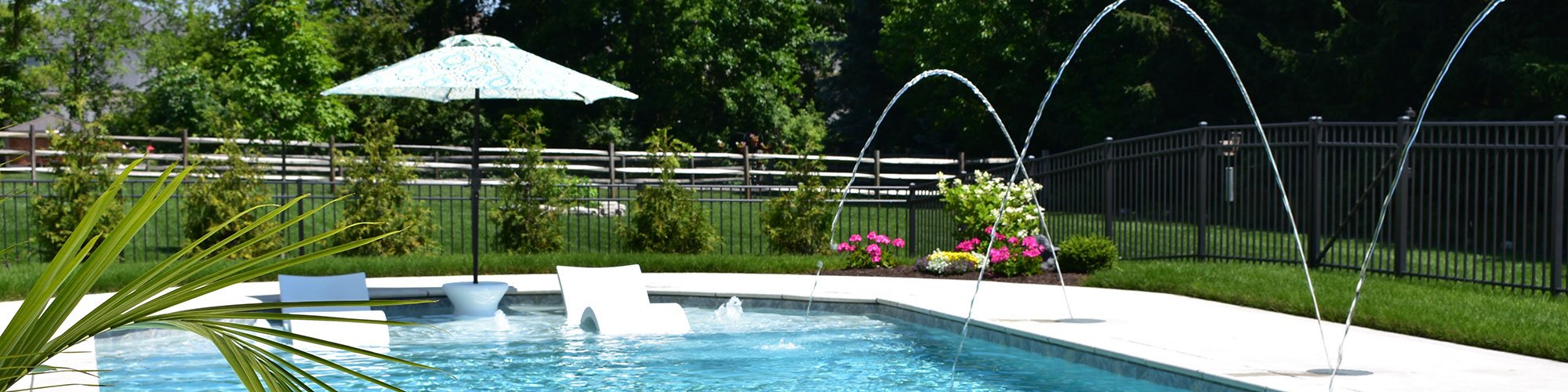
Tanning Ledges & Shallow Water Zones
Tanning ledges and shallow areas provide multi-purpose spaces that blend relaxation with light activity.
Common types and uses
- Sun shelves: Wide, shallow platforms designed for lounging partially submerged in water.
- Shallow play zones: Areas designed specifically for children’s supervised play.
- Entry transition shelves: Shallow sections that ease movement from the deck into the pool.
Functional benefits
- Support sunbathing and in-water relaxation.
- Allow placement of lounge chairs or in-pool seating.
- Provide a safe, shallow environment for children.
- Offer resting areas between swimming sessions.
Design considerations
- Depth is typically kept very shallow for comfort and safety.
- Size should match intended use, lounging, play, or transition.
- Can include umbrella sleeves, bubblers, or integrated steps.
Beach Entries
Beach entries create a natural, gradual transition into the pool without the use of steps or ladders.
Design types
- Gradual slope entry: A slow descent from deck level into shallow water.
- Textured walk-in entry: Slip-resistant surfaces for safety and comfort.
- Integrated shallow zone: Combines beach entry with tanning ledges or seating areas.
Functional benefits
- Allows easy access for all ages.
- Ideal for children, pets, and casual wading.
- Enhances comfort for users who prefer gradual depth changes.
- Adds a resort-style aesthetic to the pool design.
Design considerations
- Requires additional space to maintain a gentle slope.
- Often paired with natural finishes for a seamless look.
- Works best in pools designed for relaxation and family use.
Slides, Fountains & Water Features
Water features add movement, sound, and visual interest while enhancing how the pool is experienced.
Common feature types
- Slides: Designed for family-friendly pools and active use.
- Fountains and deck jets: Provide visual motion and cooling effects.
- Waterfalls: Add sound, texture, and a natural focal point.
- Arches and sprays: Create interactive water elements for play.
Functional benefits
- Increase visual appeal and create focal areas.
- Add sound that enhances ambiance and masks background noise.
- Encourage interaction and play for children and guests.
- Can improve water circulation when properly integrated.
Design considerations
- Placement should avoid obstructing swim areas.
- Flow strength should match desired sound and activity levels.
- Lighting integration enhances nighttime impact.
- Features can be controlled independently for flexibility.
Spatial Planning and Outdoor Integration
A well-designed pool should feel like a natural extension of the home and outdoor living space, not a separate feature placed in the yard. Proper spatial planning ensures the pool works seamlessly with patios, seating areas, and pathways, creating a cohesive layout that supports how the entire outdoor area is used.
Pool Placement in the Yard
Pool placement plays a major role in functionality, comfort, and visual balance.
- Position the pool in relation to patios, dining areas, and outdoor kitchens to support easy access.
- Maintain clear sightlines between the pool and primary gathering spaces.
- Allow smooth movement between the pool, seating, and entertaining areas.
- Consider how the pool interacts with existing structures, landscaping, and views.
- Plan circulation paths to avoid congestion around high-traffic zones.
Visual Inspiration and Research
Visual planning helps clarify design preferences and communicate ideas effectively.
- Review professional pool portfolios to understand layout possibilities.
- Explore design galleries to identify styles, shapes, and feature combinations.
- Save images that reflect preferred layouts, materials, and features.
- Use collected visuals as reference points during design discussions.
- Align inspiration images with yard size, layout, and practical constraints.
Meeting With the Design Team
The design meeting is a critical step in the pool-building process. This is where your ideas are refined, practical considerations are addressed, and decisions begin to take clear shape. Being prepared and specific during this phase helps ensure the final design meets both aesthetic goals and real-world use.
Collaborative Planning
Effective collaboration starts with clear communication and realistic expectations.
- Share inspiration images that reflect preferred pool styles, layouts, and features.
- Explain how you plan to use the pool, including daily use, entertaining, or fitness.
- Discuss the size and limitations of the yard to guide realistic design options.
- Identify budget parameters early to prioritize features effectively.
- Separate must-have elements from optional upgrades to keep decisions focused.
- Address any concerns related to safety, maintenance, or long-term usability.
Bringing Concepts to Life
Once goals are defined, the design team translates ideas into precise plans.
- Convert visual inspiration into scaled pool layouts and feature placement.
- Define pool dimensions, depths, and circulation zones.
- Use professional 3D design software to show how the pool fits into the yard.
- Review renderings to assess flow, spacing, and visual balance.
- Make adjustments before finalizing the design to avoid changes later.
Choosing the right pool options is about creating a space that fits how you live, relax, and entertain. From defining the pool’s purpose to selecting features, planning the layout, and refining the design with expert guidance, every decision plays a role in the final experience. With thoughtful planning and attention to detail, your pool becomes more than a backyard addition, it becomes a personalized outdoor retreat designed to be enjoyed for years to come. At Hawaiian Pool Builders, each step of the process is guided by experience, craftsmanship, and a commitment to building pools that truly reflect the people who use them.
Continue the Series: Building A Pool Part 3 – The Contract