Invest in Peace of Mind and Savings: The Ultimate Guide to Pool Covers
A pool cover is one of the most overlooked yet impactful elements of pool ownership. Beyond simply covering the water, the right pool cover helps protect your investment, manage maintenance, and support everyday efficiency. From reducing evaporation and retaining heat to improving safety and seasonal care, pool covers play a key role in how your pool performs year-round. This guide breaks down everything you need to know, so you can choose, use, and maintain a pool cover that truly works for your pool and lifestyle.
Types of Pool Covers
Pool covers are designed for different purposes, seasons, and usage patterns. Choosing the right type depends on how often the pool is used, safety needs, climate, and maintenance goals. Understanding how each cover functions helps ensure it performs as intended.
Solar Pool Covers
Solar pool covers are lightweight covers designed primarily for heat retention and evaporation control.
Function and materials
- Made from thin, bubble-style plastic material.
- Float directly on the water surface.
- Designed to trap heat from sunlight and reduce evaporation.
Best use cases and seasonal benefits
- Ideal for regularly used pools.
- Most effective during warm and mild seasons.
- Helps maintain water temperature overnight.
- Reduces water and chemical loss due to evaporation.
When solar covers are most effective
- During spring, summer, and early fall.
- When the pool is uncovered for swimming during the day.
- In climates with consistent sunlight.
Safety Pool Covers
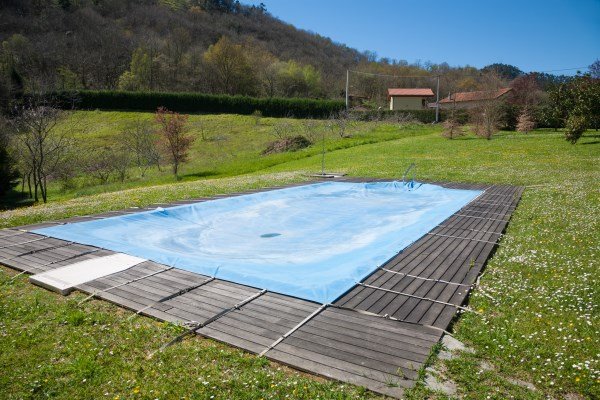
Safety pool covers are built to provide protection and security when the pool is not in use.
Design and materials
- Made from reinforced mesh or solid vinyl.
- Anchored securely to the pool deck.
- Designed to support weight and prevent access to the water.
Installation method
- Professionally measured and fitted.
- Installed using anchors set into the deck.
- Custom-sized to match pool shape.
Who benefits most from safety covers
- Households with children or pets.
- Pool owners prioritizing off-season safety.
- Pools left unattended for extended periods.
Automatic Pool Covers
Automatic pool covers provide convenience through built-in mechanical operation.
How automatic covers operate
- Open and close with the push of a button.
- Run along hidden tracks installed in the pool structure.
- Operate using an integrated motor system.
Integration with pool design
- Planned during pool construction or major renovation.
- Tracks and housing concealed within the pool structure.
- Designed to blend seamlessly with the pool layout.
Daily use considerations
- Ideal for frequent opening and closing.
- Encourages consistent cover use.
- Requires regular inspection of mechanical components.
Winter Pool Covers
Winter pool covers are designed to protect the pool during long periods of non-use.
Primary purpose
- Protect the pool during colder or off-season months.
- Prevent debris accumulation.
- Reduce maintenance during closure periods.
Protection features
- Shields the pool from leaves, dirt, and weather elements.
- Helps maintain water condition during winterization.
- Minimizes spring cleanup efforts.
When winter covers are necessary
- In regions with seasonal pool closures.
- When the pool will not be used for extended periods.
- During fall and winter months with heavy debris or weather exposure.
Benefits of Using a Pool Cover
A pool cover delivers practical, measurable advantages that directly affect how the pool performs, how much maintenance it requires, and how often it can be enjoyed. When used consistently, a cover becomes an essential tool for protecting the pool and improving daily efficiency.
Reduce Water Evaporation
Evaporation is one of the primary causes of water loss in pools.
- Limits exposure of water to sun and wind.
- Reduces the need for frequent refilling.
- Helps maintain consistent water levels.
- Lowers the amount of fresh water introduced into the pool.
Retain Heat and Maintain Water Temperature
Pool covers help stabilize water temperature.
- Traps heat gained during the day.
- Reduces heat loss during cooler nights.
- Decreases heater run time.
- Maintains comfortable swimming temperatures longer.
Improve Pool Safety
Certain pool covers add an important layer of protection.
- Prevents accidental access when the pool is not in use.
- Supports weight when properly installed.
- Reduces risk for children and pets.
- Provides peace of mind during unattended periods.
Lower Cleaning and Maintenance Effort
A covered pool stays cleaner.
- Keeps leaves, dirt, and debris out of the water.
- Reduces strain on filtration systems.
- Decreases time spent skimming and vacuuming.
- Helps maintain water clarity with less effort.
Support Overall Pool Efficiency
Using a pool cover improves overall system performance.
- Reduces pump and heater workload.
- Lowers energy and water usage.
- Helps maintain chemical balance.
- Extends the lifespan of pool equipment.
How to Choose the Right Pool Cover
Selecting the right pool cover requires more than choosing a category, it involves matching the cover to how your pool is used, how it’s built, and how you want to manage it day to day. Follow these steps to make a practical, long-term decision.
Step 1: Evaluate How Often the Pool Is Opened and Closed
Start with real usage patterns, not ideal ones.
- If the pool is used daily or several times a week, choose a cover that is quick and easy to operate to ensure consistent use.
- If the pool is used occasionally or left unattended, prioritize covers designed for security and long-term protection.
- If the pool remains closed for extended periods, focus on durability and debris protection rather than convenience.
Key takeaway: The more often you open and close the pool, the more important ease of operation becomes.
Step 2: Identify the Primary Purpose of the Cover
Every cover performs best when matched to a specific goal.
- Heat retention and evaporation control: Solar covers are designed to sit directly on the water surface and trap heat.
- Safety and restricted access: Safety covers are engineered to prevent entry and support weight.
- Daily convenience: Automatic covers encourage regular use due to push-button operation.
- Seasonal protection: Winter covers are intended for long periods of non-use and heavy debris.
Key takeaway: Choose the cover based on what problem you need it to solve most.
Step 3: Factor in Climate and Environmental Conditions
Environmental exposure directly affects cover performance.
- In hot, sunny climates, evaporation control and heat retention are critical.
- In windy areas, covers must fit securely to prevent lifting or shifting.
- In regions with heavy leaf drop or storms, debris resistance is essential.
- In areas with seasonal closures, off-season durability becomes a priority.
Key takeaway: The cover must withstand the most demanding conditions it will face.
Step 4: Confirm Pool Shape, Size, and Structural Features
A cover must be compatible with the pool’s physical design.
- Measure the pool precisely, including length, width, and radius points.
- Identify irregular shapes that may require a custom-fit cover.
- Account for raised spas, tanning ledges, water features, or overflow edges.
- Verify deck space and material compatibility for anchoring or track systems.
Key takeaway: Improper fit reduces effectiveness, safety, and lifespan.
Step 5: Decide Between Manual and Automatic Operation
Daily handling requirements should match your expectations.
Manual covers
- Require physical handling and proper storage.
- Depend on user consistency to be effective.
- Best for owners comfortable with routine setup and removal.
Automatic covers
- Open and close with a switch or control system.
- Designed for frequent use with minimal effort.
- Require mechanical components and professional installation.
Key takeaway: Convenience directly affects how often the cover is actually used.
Step 6: Consider Long-Term Maintenance and Replacement
Think beyond installation.
- Review expected lifespan of the cover material.
- Understand cleaning and inspection requirements.
- Factor in repair access for mechanical components if applicable.
- Plan for eventual replacement based on usage and exposure.
Pool Cover Materials and Durability
The performance of a pool cover depends heavily on the material it’s made from. Each material offers different levels of strength, lifespan, weather resistance, and maintenance needs. Understanding these differences helps you choose a cover that holds up to your environment and usage.
Common Materials Used in Pool Covers
Pool covers are typically manufactured from a few proven materials, each designed for specific applications.
Bubble-style polyethylene (solar covers)
- Lightweight plastic with air pockets.
- Designed to float directly on the water surface.
- Primarily used for heat retention and evaporation control.
Reinforced mesh (safety and winter covers):
- Tightly woven fabric that allows water to drain through.
- Prevents debris accumulation on the surface.
- Anchored securely to the deck.
Solid vinyl (safety and winter covers):
- Heavy-duty, non-porous material.
- Blocks sunlight and debris completely.
- Requires a drainage system to remove standing water.
Vinyl-laminated fabrics (automatic covers):
- Thick, reinforced material designed for repeated movement.
- Runs along tracks and withstands frequent opening and closing.
Durability and Lifespan Expectations
Different materials are designed for different levels of use.
- Solar covers generally last 2–5 years, depending on sun exposure and handling.
- Mesh safety covers often last 10–15 years with proper care.
- Solid vinyl covers typically last 6–10 years, depending on climate and maintenance.
- Automatic cover fabrics usually last 5–8 years, influenced by usage frequency and maintenance.
Weather Resistance Considerations
Climate and environmental exposure affect material performance.
- UV exposure accelerates wear on lightweight plastic covers.
- Heavy rain and snow require materials designed to handle weight and drainage.
- Wind resistance depends on proper anchoring and fit.
- Temperature extremes can cause expansion, contraction, or material fatigue.
Maintenance Requirements by Material Type
Maintenance needs vary based on material and design.
Solar covers
- Rinse regularly to remove chemical residue.
- Store properly when not in use to prevent UV damage.
Mesh covers
- Periodically remove debris from the surface.
- Inspect anchors and straps for tension and wear.
Solid vinyl covers
- Pump off standing water promptly.
- Clean surface to prevent staining or algae growth.
Automatic covers
- Keep tracks clean and clear of debris.
- Inspect fabric, motor, and moving parts regularly.
Installing a Pool Cover
Correct installation ensures a pool cover functions safely and lasts as intended. The installation method depends on the type of cover and how it will be used.
Professional Installation vs DIY
- Professional installation is recommended for safety and automatic covers to ensure proper fit, anchoring, and operation.
- DIY installation is common for solar and some winter covers when instructions are followed carefully and the pool shape is simple.
Measuring and Fitting
- Measure the pool accurately, including curves and unique features.
- Account for raised spas, steps, or water features.
- Ensure the cover fits securely without gaps or excess material.
Common Installation Challenges
- Incorrect measurements leading to poor coverage.
- Misaligned anchors or track systems.
- Improper tension that affects performance.
Safety and Operation Checks
- Confirm the cover opens and closes smoothly.
- Inspect anchors, straps, or tracks for secure placement.
- Test safety features before regular use.
A well-chosen pool solution starts with thoughtful planning and the right professional guidance. Every element, from efficiency and safety to long-term care, plays a role in how enjoyable and effortless your pool experience becomes. When details are handled correctly, your pool remains a source of relaxation and enjoyment rather than added work.
Contact Hawaiian Pool Builders Today
Our pool experts are happy to answer your questions and help you choose the right pool cover for your backyard oasis. Let us help you create a worry-free pool ownership experience!